Our Materials
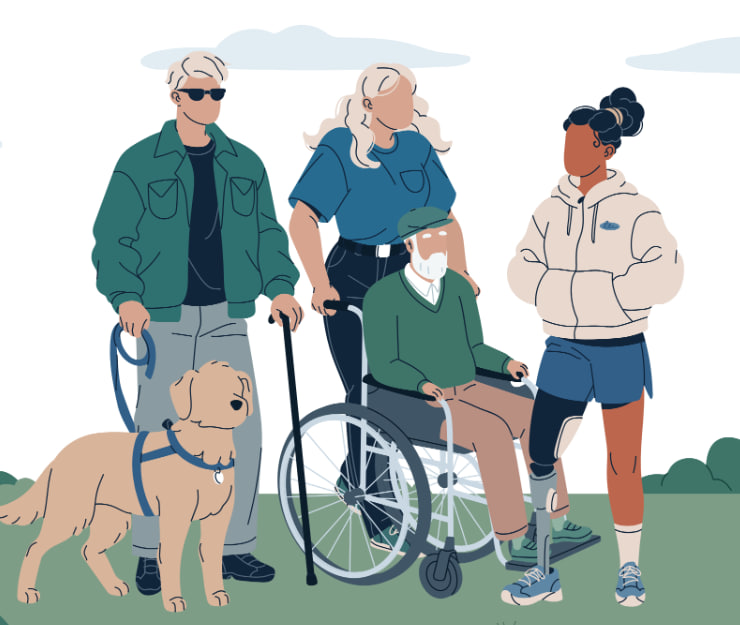
Policy Paper: Displacement, Disability and Care
How can Germany and Poland better support refugees with disabilities and their family caregivers?

Сross-national study “Invisible Care, Unmet Needs: The Situation of Ukrainian Caregivers of Persons with Disabilities in the EU”, 2026
This study highlights the overlooked situation of Ukrainian refugee caregivers of persons with disabilities in the EU.
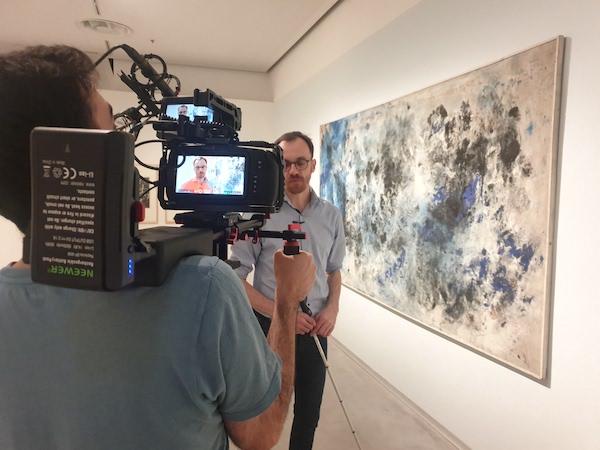
Video Course “Interactive Inclusion”
For this tutorial, ten experts from the field of inclusion and culture talk about their professional and personal experiences in nine videos and give suggestions on necessary and desirable measures for greater accessibility in museums.
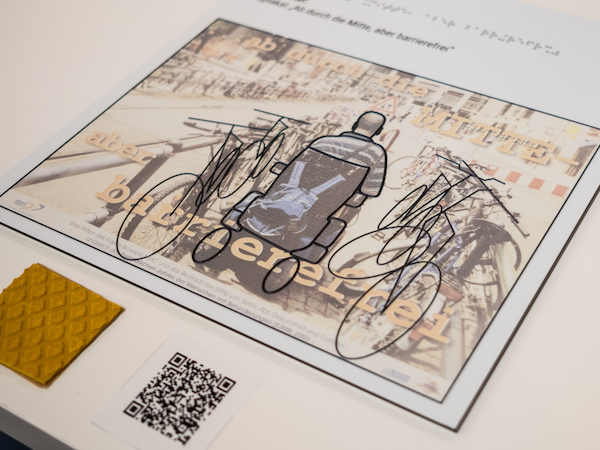
Policy Paper for Cultural Institutions
The aim of this policy paper is to show you how you can involve and include disabled people as experts at all levels of your cultural institution. We would like to encourage you to promote inclusion by outlining measures for successful collaboration and cooperation.
Inclusive Language Guide
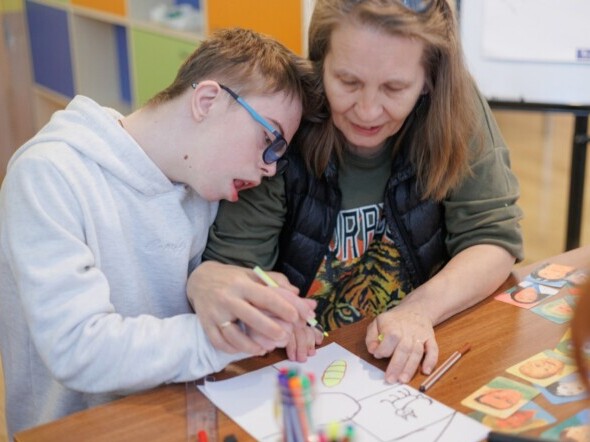
The aim of the glossary is to promote a more inclusive society. Language has the power to either harm or show respect, and using uninformed or incorrect terms can be disrespectful. People with disabilities deserve recognition for who they are and for their abilities. They should be addressed with language that acknowledges their inherent human dignity. Everyday language, as well as that used in laws, media, and literature, shapes public attitudes—either reinforcing or removing barriers.